Checklist before buying drip irrigation kit UK: UK Practical Guide
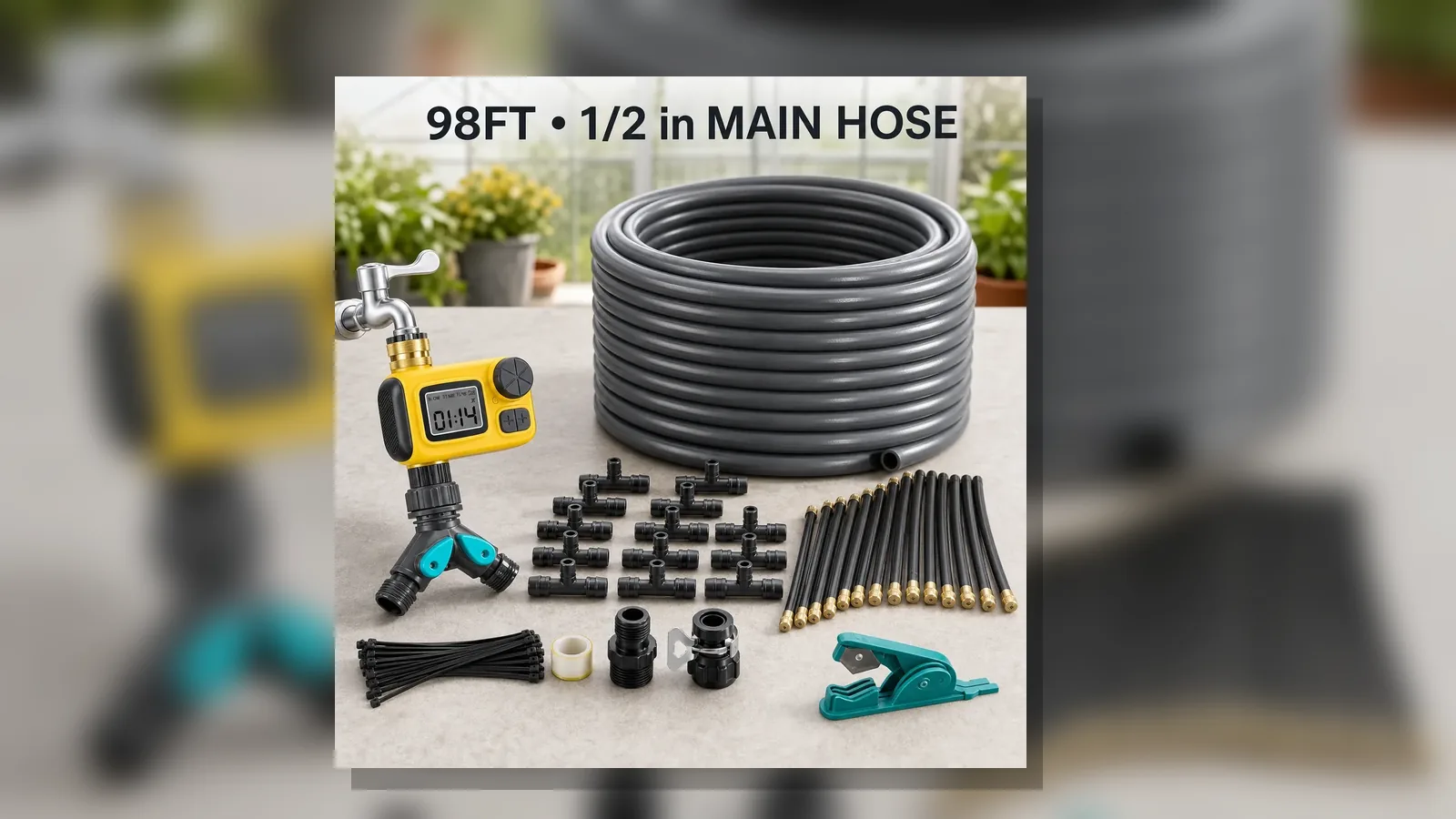
Before you buy a drip irrigation kit in the UK, work through a short checklist: measure the areas you need to water, map separate zones, confirm your tap or water source and fittings, list the kit contents you actually need (tubing, emitters, connectors, and whether you want a timer), and stop if sizing, compatibility, or claims look unclear. This commercial investigation guide keeps the process practical so you can compare options without guessing.
Direct answer checklist
Use this checklist before buying drip irrigation kit UK setups for patio pots, borders, or mixed beds:
- Sketch each watering zone and note what you are watering (pots, beds, or mixed planting).
- Measure run lengths and count key watering points so kit capacity can be matched to your layout rather than guessed.
- Confirm your outdoor tap location, thread type, and whether you need a pressure-reducing or filter accessory (only if your installation requires it).
- Decide whether you need manual control only or a kit that includes a smart water timer with adjustable emitters.
- List must-have parts: main line, drip line or micro tubing, adjustable emitters, tees and connectors, end plugs, and stakes.
- Check that product copy describes contents clearly; if hose length, timer weatherproofing, or performance figures are vague, treat that as a pause point.
- Plan a first-use dry fit and a short leak check before leaving any system running unattended.
UK buying guides also stress mapping garden zones and measuring distances when you select a garden drip irrigation kit, whether for simple patio pots or larger flower borders.
Pre-checks
Complete these pre-checks before you commit to a purchase.
Space and water source
- Walk the garden and mark where containers, borders, and any shaded or windy spots sit relative to the tap.
- Note obstacles such as paths, raised beds, or fencing that will force tubing routes.
- Confirm you can reach each zone without unsafe trailing hose across walkways.
Needs and goals
Before buying the right drip irrigation kit, assess your specific needs: calculate what you intend to water, review any existing hose or irrigation parts you already own, and set a realistic goal for how automated you want watering to be.
Kit contents checklist
- Match listed components to your sketch rather than buying on packaging appeal alone.
- If comparing options that include a timer, verify whether the timer is included in the kit you are viewing or sold separately.
- Prefer clear emitter and connector descriptions over marketing language.
UK practical context
If you are planning an automatic drip approach for routine watering, read a current UK guide on building an automatic drip irrigation system so your checklist covers installation sequence, hose-pipe restriction periods, and DIY fit-out steps without overclaiming results.
Red flags to stop
Pause or walk away if any of the following appear:
- No clear parts list or zone guidance for the size of garden you measured.
- Unverified water-saving percentages, hose-length guarantees, or performance claims without supporting detail.
- Timer weatherproof or IP ratings stated without verified product facts.
- Compatibility claims for taps, filters, or other brands that are not specified.
- Pressure, flow, or plant-health promises that cannot be checked against the listing.
- Conflicting kit variants with no plain explanation of what changes between options.
Record-keeping tips
Keep simple notes so comparison stays factual:
- Save your zone sketch, measured distances, and emitter counts.
- Record the tap fitting type and any adapters you already own.
- Note which kit contents you still need after checking your shed stock.
- Log purchase date, variant chosen, and first-use checks (dry fit, leak test, timer settings if included).
- Keep links to the product page and any public buying guides you used for zone mapping or needs assessment.
Next step
When your checklist is complete and the contents match your mapped zones, review the garden drip irrigation kit with smart water timer and adjustable emitters for a clear next step on kit contents and options.
FAQ
What belongs on a drip irrigation kit first use checklist UK gardeners can follow?
Dry-fit the layout, confirm emitters sit at plant root zones, flush lines if the instructions say so, check joints for drips, then run a short supervised cycle before relying on any timer schedule.
What should a drip irrigation kit kit contents checklist include?
Main supply tubing, drip or micro lines, adjustable emitters, connectors and tees, end stops, stakes, and—only if you need automation—a compatible water timer listed as included or bought separately.
How do I use a drip irrigation kit training checklist UK style for someone new to drip systems?
Teach zone mapping and measuring first, then parts identification, then a supervised dry fit and leak check. Leave advanced timer programming until the layout holds water correctly.
Do I need an automatic system to start?
No. Many gardeners start with a manual kit sized to measured zones, then add timing once the layout is proven. Automatic drip guides are useful when you are ready to plan install steps and routine watering around UK outdoor conditions.